

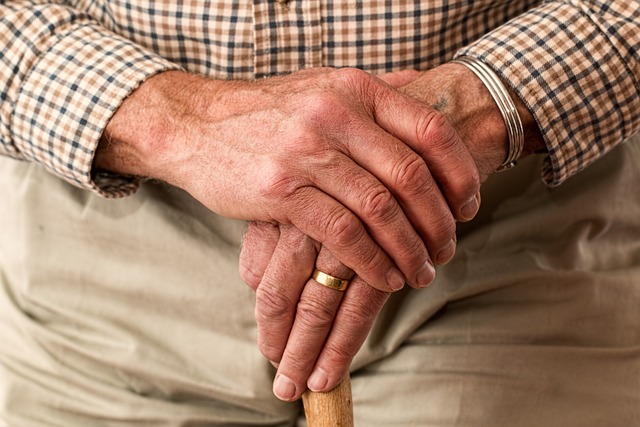
What is Parkinson’s?

Parkinson’s disease is a brain disorder that causes unintended or uncontrollable movements, such as shaking, stiffness, and difficulty with balance and coordination.
Parkinson’s disease occur when nerve cells in the basal ganglia, an area of the brain that controls movement, become impaired and/or die. Normally, these nerve cells, or neurons, produce an important brain chemical known as dopamine. When the neurons die or become impaired, they produce less dopamine, which causes the movement problems associated with the disease. Scientists still do not know what causes the neurons to die. Symptoms usually begin gradually and worsen over time. As the disease progresses, people may have difficulty walking and talking. They may also have mental and behavioral changes, sleep problems, depression, memory difficulties, and fatigue. (National Institute of Health – NIH)
Symptoms often begin on one side of the body or even in one limb on one side of the body. As the disease progresses, it eventually affects both sides. However, the symptoms may still be more severe on one side than on the other.
Over time, as the disease progresses, some people may develop dementia and be diagnosed with Parkinson’s dementia, a type of Lewy body dementia. People with Parkinson’s dementia may have severe memory and thinking problems that affect daily living.
 Parkinson’s signs and symptoms may include:
- Tremor. A tremor, or rhythmic shaking, usually begins in a limb, often your hand or fingers. You may rub your thumb and forefinger back and forth. This is known as a pill-rolling tremor. Your hand may tremble when it’s at rest. The shaking may decrease when you are performing tasks.
- Slowed movement (bradykinesia). Over time, Parkinson’s disease may slow your movement, making simple tasks difficult and time-consuming. Your steps may become shorter when you walk. It may be difficult to get out of a chair. You may drag or shuffle your feet as you try to walk.
- Rigid muscles. Muscle stiffness may occur in any part of your body. The stiff muscles can be painful and limit your range of motion.
- Impaired posture and balance. Your posture may become stooped. Or you may fall or have balance problems as a result of Parkinson’s disease.
- Loss of automatic movements. You may have a decreased ability to perform unconscious movements, including blinking, smiling or swinging your arms when you walk.
- Speech changes. You may speak softly, quickly, slur or hesitate before talking. Your speech may be more of a monotone rather than have the usual speech patterns.
- Writing changes. It may become hard to write, and your writing may appear small.
Treatment
Medicines used to treat Parkinson’s symptoms, include:
- Dopamine agonists to stimulate the production of dopamine in the brain
- Enzyme inhibitors (e.g., MAO-B inhibitors, COMT inhibitors) to increase the amount of dopamine by slowing down the enzymes that break down dopamine in the brain
- Amantadine to help reduce involuntary movements
- Anticholinergic drugs to reduce tremors and muscle rigidity
Sometimes medicines are not effective, in that case the following might be used.
Deep brain stimulation might be recommended
 For people with Parkinson’s disease who do not respond well to medications, the provider may consider deep brain stimulation. During a surgical procedure, a doctor implants electrodes into part of the brain and connects them to a small electrical device implanted in the chest. The device and electrodes painlessly stimulate specific areas in the brain that control movement in a way that may help stop many of the movement-related symptoms of Parkinson’s, such as tremor, slowness of movement, and rigidity.
Other important avenues to help with symptoms
Diet and exercise should still be the main stay, nutritional counseling is imperative. Speech therapy can be helpful too. Joining sports groups with others.
Make sure to read my disclaimer.
~Minu





such good information. More research in this area would be so beneficial too.
Great read. Very informative and spot on.